How Editorial Book Reviews Build Trust Between Authors and Readers

With over two million books published every year, how do readers decide what to buy—and how do authors break through the noise? The secret lies in trust. Discover how Editorial Book Reviews, ethically leveraged paid book reviews, and prestigious Author Award Contests work together to build instant credibility, boost sales, and turn casual browsers into lifelong readers.
Picture this: You are standing in the middle of a massive, bustling bookstore, or scrolling through an endless digital storefront that stretches on into infinity. Everywhere you look, thousands of eye-catching covers flash past, each one boldly claiming to be a "masterpiece," a "must-read," or "the next big thing."
As a reader, how do you decide where to invest your precious time and hard-earned money? And as an author, how on earth do you make your voice heard above the deafening chorus of millions of books competing for attention?
Every single year, over two million books are published worldwide. While this Golden Age of self-publishing and independent publishing gives storytellers unprecedented freedom, it also creates a daunting discovery crisis for readers. Readers are increasingly cautious about what they pick up. They’ve been burned before by slick cover design covering up poor editing, or glowing five-star ratings on consumer sites that turned out to be written by the author’s proud grandmother and enthusiastic college roommates.
So, how do we bridge this gap? How does an author communicate quality, authenticity, and respect for a reader’s time before a single chapter is opened?
The answer lies in a time-tested, powerful tool of literary craft and marketing: Editorial Book Reviews.
In this comprehensive guide, we'll dive deep into how professional editorial critique builds an unshakeable bridge of trust between authors and readers. We will demystify the world of paid book reviews, unpack how Author Award Contests elevate an author’s professional standing, and explore actionable strategies you can use to transform critical acclaim into long-term reader loyalty.
1. Understanding Editorial Book Reviews: What Are They and Why Do They Matter?
To appreciate why Editorial Book Reviews have so much power in today’s book ecosystem, we first need to distinguish them from standard consumer reviews.
If you head over to Amazon, Goodreads, or StoryGraph, you’ll find thousands of reader reviews. These are short, subjective, star-rated impressions written by everyday book lovers. Consumer reviews are fantastic for gauging popular sentiment, but they are inherently informal, highly emotional, and occasionally unpredictable. A reader might give a brilliant sci-fi novel a 1-star review simply because the shipping box arrived bent, or because they dislike first-person narration.
An Editorial Book Review, on the other hand, is a formal, professional critique written by a trained literary analyst, editor, journalist, or experienced industry critic.
The Key Characteristics of an Editorial Review
- Objective Literary Analysis: Rather than just saying "I loved this book," an editorial reviewer evaluates character arcs, pacing, thematic depth, prose style, dialogue authenticity, and narrative structure.
- Contextual Framing: Professional critics understand genre conventions. They can place a book within its broader cultural, historical, or literary context, explaining why a particular story matters right now.
- Constructive and Balanced Perspective: An editorial review focuses on craftsmanship. Even when highlighting flaws, a professional reviewer articulates how those elements affect the reader's experience without descending into personal bias or internet toxicity.
- High Editorial Standards: Reputable review publications adhere to strict journalistic ethics, ensuring that every evaluation meets a consistent benchmark of literary scrutiny.

When readers see an editorial review from a recognized outlet featured on a book’s cover, sales page, or press kit, it acts as a seal of approval. It tells the reader: "A professional whose job it is to analyze literature has evaluated this work, and it meets high standards of storytelling craftsmanship."
2. The Psychology of Trust in Book Marketing
Trust is the single most valuable currency in the creative world. When a reader purchases your book, they aren't just spending $15 or $20; they are committing anywhere from 5 to 15 hours of their personal life to your imagination. That is a massive investment.
People rely heavily on psychological shortcuts to make purchasing decisions under overwhelming choice. In marketing and psychology, two primary concepts govern this process: Social Proof and Expert Authority.
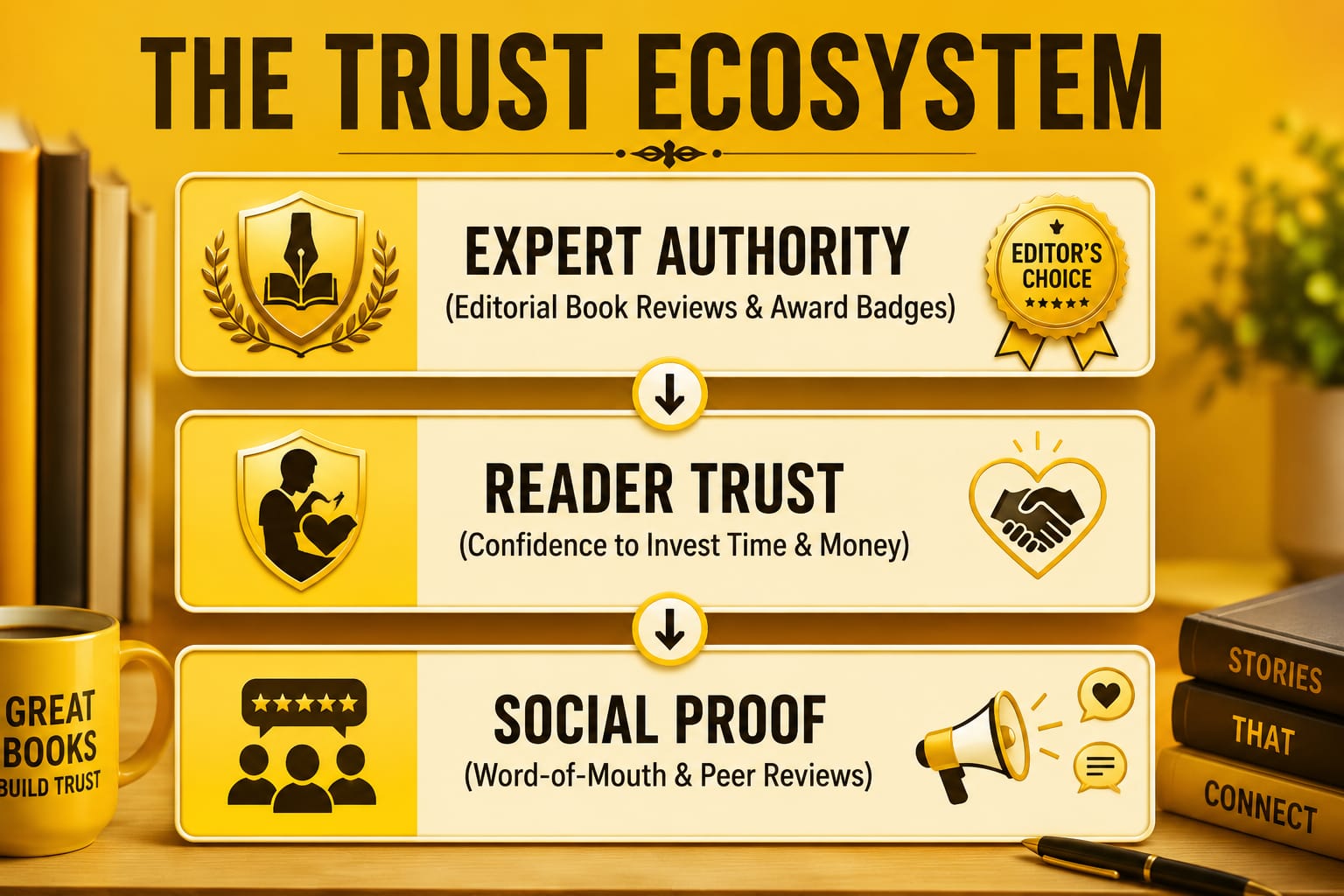
Social Proof vs. Expert Authority
- Social Proof happens when a reader sees that hundreds of their peers enjoyed a book. It whispers: "Other people like you enjoyed this, so you probably will too."
- Expert Authority happens when an established critic or publication endorses a book. It states: "This work demonstrates genuine technical skill, artistic integrity, and narrative quality."
Social proof is wonderful, but it takes a long time to build—especially for debut or indie authors without an existing fanbase. This is where Editorial Book Reviews serve as a catalyst. They provide instant Expert Authority, giving prospective buyers the confidence to take a chance on an unfamiliar name.
The "Halo Effect" of Independent Validation
Psychologists often speak of the "Halo Effect"—a cognitive bias in which our overall impression of something influences how we view its specific properties.
When a book boasts a polished quote from a respected editorial reviewer on its front cover, readers automatically view the entire package with greater respect. The cover art looks sharper, the blurb reads more professionally, and the author appears more established.
Crucially, this validation doesn't just convince someone to buy the book; it actually enhances their reading experience! When readers enter a story expecting quality because a professional reviewer vouched for it, they engage more deeply with the prose, give complex plots the benefit of the doubt, and approach the narrative with heightened enthusiasm.
3. Navigating Paid Book Reviews: Truth, Misconceptions, and Ethical Standards
Now, let's talk about an area that often causes confusion and debate among authors: paid book reviews.
When authors first hear the term "paid review," alarm bells sometimes go off. Is it ethical to pay for a review? Isn't that just bribing someone for praise? Doesn't Amazon prohibit paid reviews?
Let's clear up these misconceptions right now, because understanding how legitimate paid book reviews work is one of the most important lessons in professional author marketing.
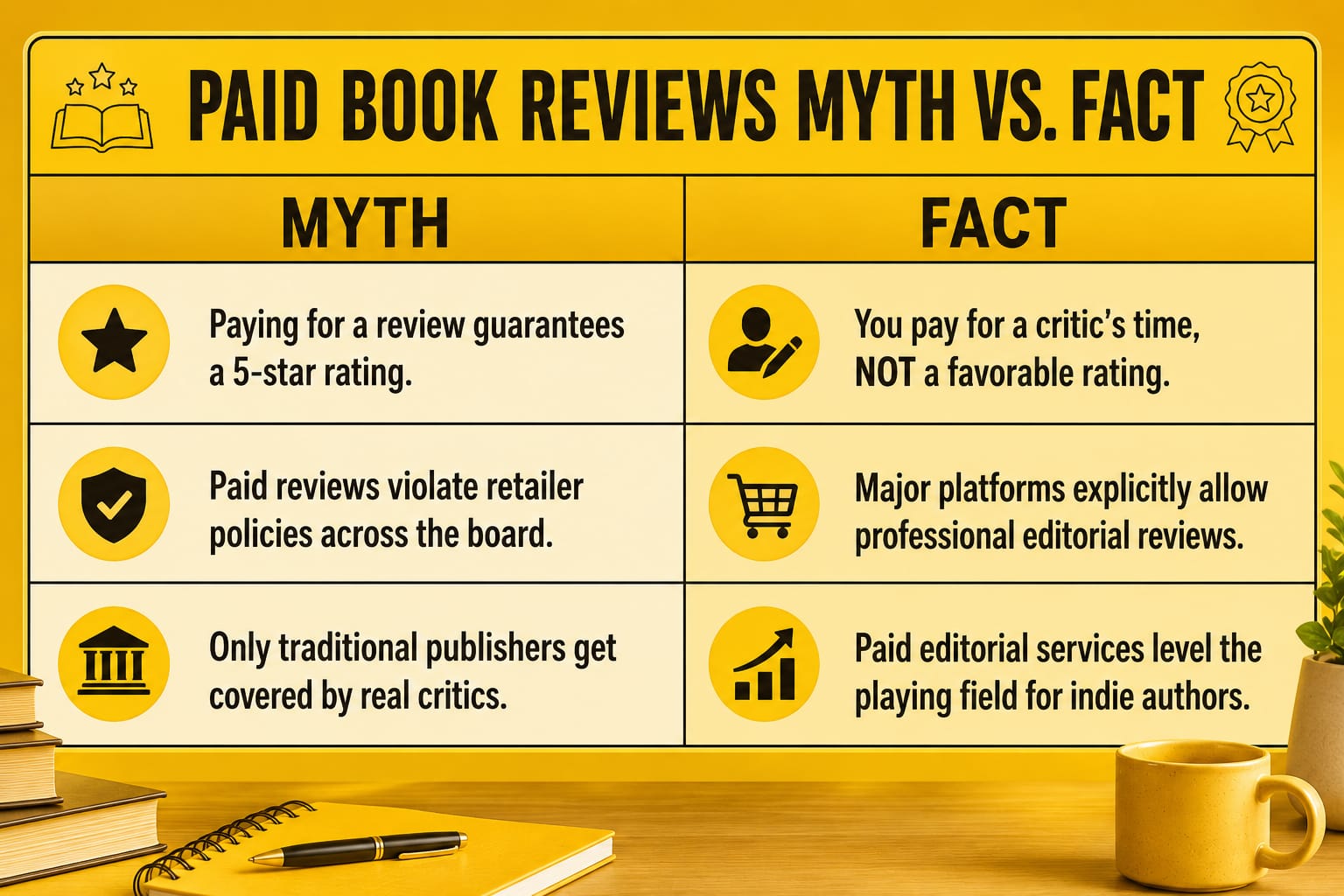
Clarifying the Myth: What You Are (and Aren't) Paying For
A fundamental difference exists between paying a click farm to leave fake 5-star consumer ratings on a storefront and hiring a professional review publication to evaluate your manuscript.
- Fake Consumer Reviews (Illegitimate): Paying individuals to post deceptive 5-star ratings under customer accounts. This violates platform policies (including Amazon's terms of service) and destroys reader trust.
- Professional Paid Editorial Reviews (Legitimate): Paying a professional review outlet or trade publication for a critic's time, expertise, and guaranteed turnaround window.
Think of it like submitting your taxes. You aren't paying an accountant to guarantee you get money back from the government; you are paying for their professional labor, specialized knowledge, and time.
When you purchase a professional editorial review service, you are securing an objective review by an expert critic within a specific timeframe (often 4 to 8 weeks). The reviewer’s obligation is to give their honest, unbiased opinion—whether that opinion is glowing, mixed, or critical.
The Role of Paid Reviews in Leveling the Playing Field
Historically, traditional publishing houses possessed exclusive access to major review journals. They sent out advance reader copies (ARCs) months before publication, backed by massive publicity budgets and long-standing industry relationships.
Indie authors and small presses were left out in the cold, unable to secure timely professional critiques before launch.
The evolution of reputable paid book reviews revolutionized this dynamic. By providing paid options for expedited or guaranteed coverage, professional review services democratized access to expert critiques. Today, an independent author can secure high-caliber, professional feedback alongside traditionally published bestsellers.
Maintaining Editorial Integrity and Disclosure
To ensure that paid book reviews build trust rather than diminish it, reputable services adhere to strict ethical guidelines:
- Editorial Independence: The review team operates independently of commercial influences. Critics are instructed to give their candid, professional assessment.
- Author Autonomy: Most professional paid review services allow the author to decide whether or not to publish the final review publicly. If a review happens to be overly critical, you aren't forced to display it on your book's sales page.
- Transparent Formatting: Editorial reviews are published in dedicated editorial sections on Amazon, Barnes & Noble, and author websites, keeping them clearly distinct from customer reviews.
When handled with professional integrity, paid book reviews represent an invaluable investment in your book's marketability and authority.
4. Amplifying Authority with Author Award Contests
If Editorial Book Reviews establish the foundation of your literary credibility, Author Award Contests act as the glittering spotlight that brings that credibility into focus.
Every author dreams of adding a prestigious award seal to their book cover. But awards are much more than decorative stickers—they are powerful signals of quality that resonate strongly with readers, librarians, booksellers, and media outlets.
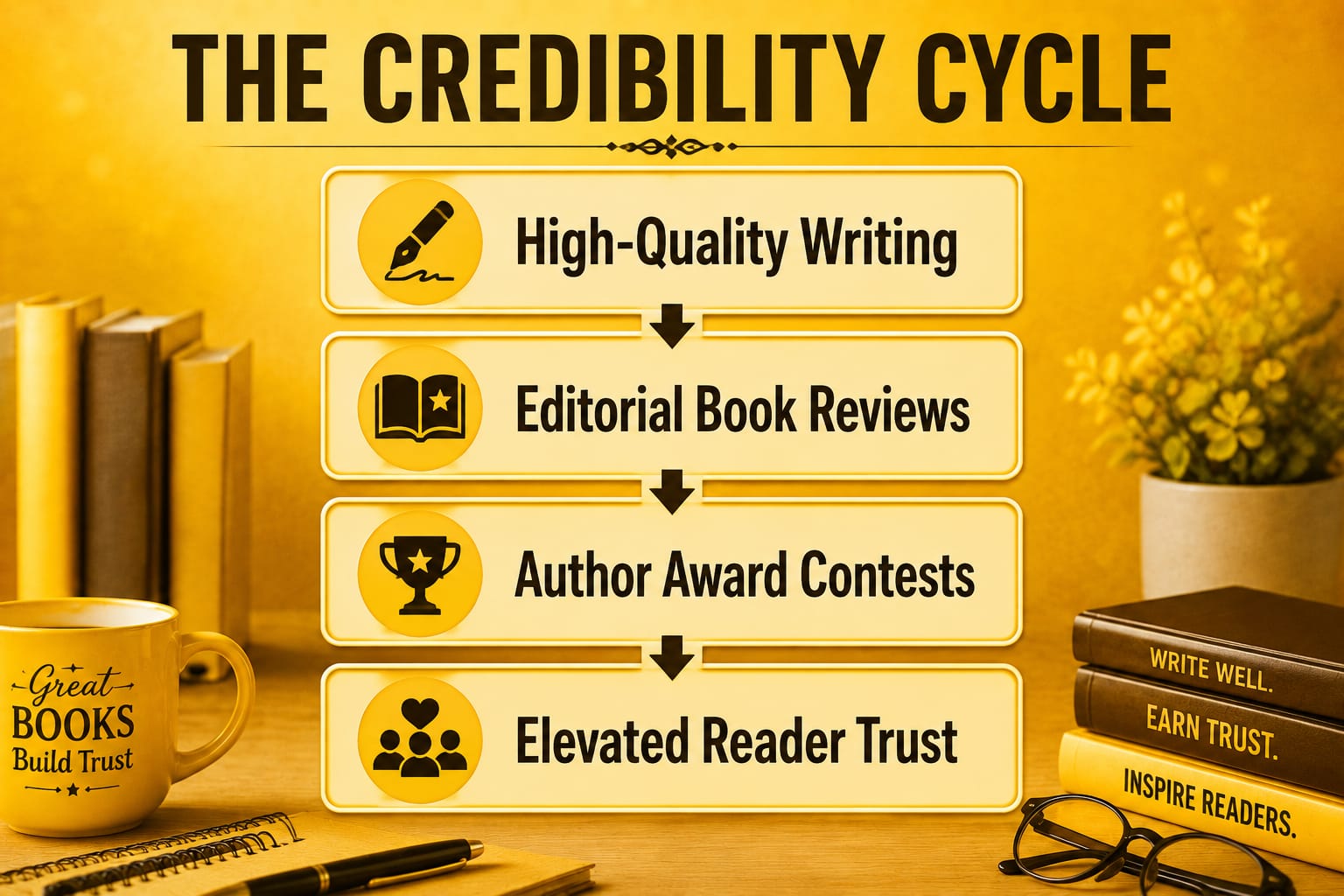
Why Awards Matter to the Modern Reader
In a saturated marketplace, readers constantly seek shortcuts to cut through the noise. An award badge on a book cover communicates three vital messages instantly:
- Validation Beyond the Author's Inner Circle: A panel of objective judges thoroughly evaluated this book against dozens or hundreds of competitors in its category.
- Commitment to Quality: Winning or placing in an award contest shows that the author invested in professional editing, cover design, and overall polish.
- Excellence in Genre: It signals that the book excels within its specific category, whether that’s historical fiction, cozy mystery, young adult fantasy, or self-help.
How Award Contests Complement Editorial Reviews
The relationship between Editorial Book Reviews and Author Award Contests is deeply synergistic:
- Informed Submissions: Reading your editorial reviews can help you identify which award categories your manuscript is best suited for. If critics consistently praise your worldbuilding or dialogue, you can target contests that place heavy emphasis on those elements.
- Judges' Impressions: Many contest judges examine a book’s overall presentation, including existing editorial praise. Strong quotes from respected review outlets set a positive tone from the start.
- Compounded Marketing Power: When you pair a glowing editorial quote with a "Winner" or "Finalist" badge from a reputable award contest, your promotional graphics and press releases instantly gain double the marketing punch.
Evaluating Award Contests: Choosing the Right Opportunities
Not all contests are created equal. To protect your budget and maximize your return on investment, look for Author Award Contests that demonstrate the following hallmarks of credibility:
- Transparent Judging Criteria: Clear information on who evaluates entries and what criteria (prose, originality, pacing, design) are used.
- Established Track Record: A history of previous winners, visible community engagement, and clear organizational backgrounds.
- Meaningful Recognition: Contests that provide detailed scorecards, physical certificates, high-resolution digital badges, or press distribution to help you leverage your achievement.
By strategically participating in reputable award programs, you give your book a distinct competitive edge and instill confidence in potential readers.
5. Step-by-Step Guide: How Authors Can Strategically Leverage Editorial Reviews and Awards
Securing great Editorial Book Reviews and earning accolades in Author Award Contests are huge accomplishments. But getting them is only half the battle—the real magic happens in how you use them!
Here is a practical, step-by-step framework to maximize the trust-building potential of your reviews and awards across every stage of your author journey.
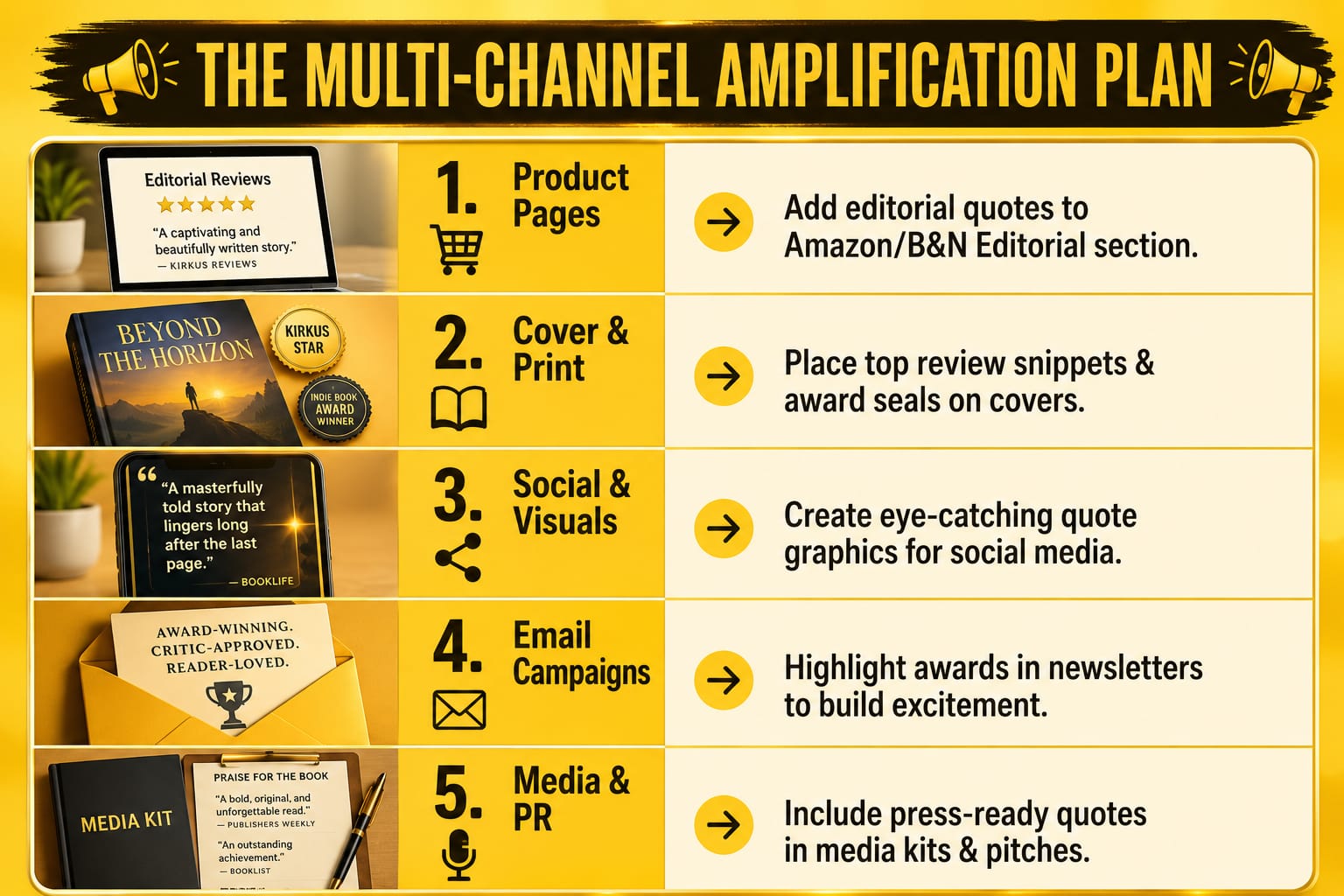
Step 1: Maximize Your Book's Online Sales Pages
When a prospective reader clicks on your book’s Amazon, Barnes & Noble, or Kobo page, you have roughly six seconds to grab their attention and earn their trust.
- Utilize the "Editorial Reviews" Section: On Amazon Author Central, you can manually insert editorial reviews into a dedicated, prominent section above the product description. Don't let this space sit empty!
- Lead with the Strongest Hook: Extract a punchy, 1-to-2 sentence quote that highlights the most exciting aspect of your book. Place the source and publication name in bold (e.g., "A pulse-pounding thriller that keeps you guessing until the final page." — Literary Critique Quarterly).
- Feature Award Accolades in the Title or Subtitle Field: If permitted by platform guidelines, update your book's description header to prominently mention major award wins (e.g., Winner of the 2024 International Book Excellence Award).
Step 2: Elevate Your Physical and Digital Cover Art
Your book cover is your premier real estate. Integrating reviews and award badges into your cover design creates immediate authority.
- Front Cover Blurbs: Select a crisp, compelling single-line quote from a top editorial review to place near the top or bottom of your front cover.
- Back Cover Spotlights: On paperback and hardcover editions, feature two or three short editorial excerpts above your book blurb.
- Award Seals: Place high-resolution award stickers or printed badges on the front cover. Ensure they match your cover's color palette and aesthetic without obscuring essential design elements.
Step 3: Craft Engaging Social Media and Content Marketing
Transform your reviews and award announcements into captivating visual content that engages your audience across social platforms.
- Pull-Quote Graphics: Use design tools like Canva to create elegant quote graphics featuring glowing snippets from your paid book reviews.
- Behind-the-Scenes Celebrations: Share your award submission journey with your followers! Post unboxing videos of physical award certificates, trophies, or print proofs showing your new cover seals.
- Reader Appreciation Posts: Frame your success around your readers. Express sincere gratitude for the community that supported your work, reinforcing a friendly, warm connection with your fanbase.
Step 4: Supercharge Your Pitch to Local Bookstores, Libraries, and Media
If you plan to pitch local independent bookstores for shelf space, target public libraries for acquisitions, or reach out to local journalists for interviews, professional validation is your secret weapon.
- Create a Professional One-Sheet: Design an author press sheet that includes your book cover, blurb, author bio, ordering info (ISBN, distributor details), and prominent editorial review quotes.
- Lead with Authority: In your query emails to librarians and media outlets, mention your award wins and editorial accolades in the opening paragraph. Librarians especially rely on professional reviews from trusted sources when making purchasing decisions with public funds.
6. The Long-Term Impact: From One-Off Readers to Lifelong Fans
Building a successful author career isn't about selling a single copy of a single book. It's about cultivating a loyal tribe of readers who eagerly anticipate every new release you publish.
When you consistently invest in high editorial standards, secure reputable Editorial Book Reviews, explore transparent paid book reviews, and enter respected Author Award Contests, you create a snowball effect of credibility.
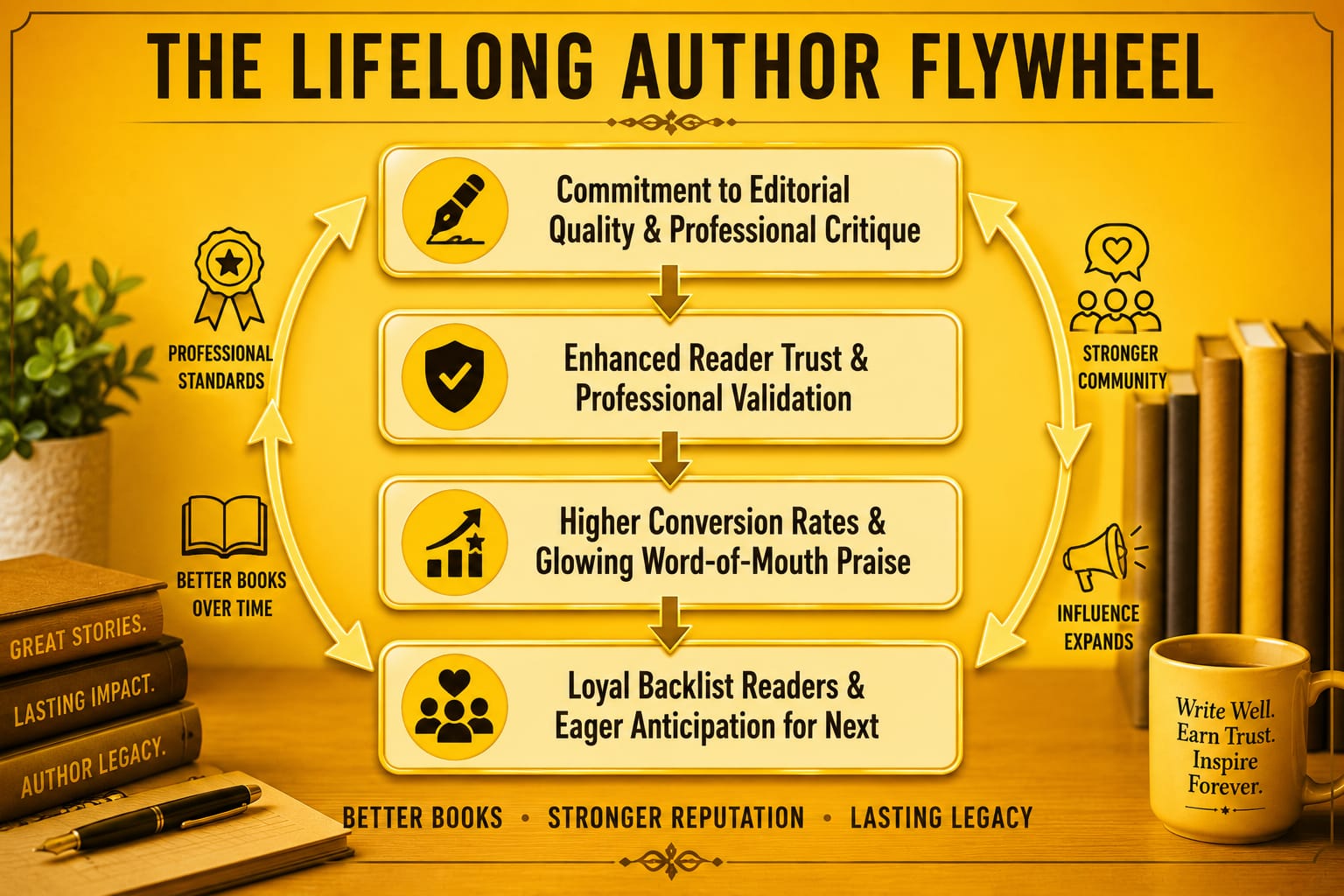
The Flywheel of Author Success
- Initial Reader Confidence: First-time readers feel safe trying your work because professional critics and award judges have vetted it.
- Exceeded Expectations: Because you prioritized editorial quality, the story delivers on its promises. The reader finishes the book feeling thoroughly entertained and satisfied.
- Organic Word-of-Mouth Praise: Happy readers post their own 5-star consumer reviews, recommend your book in book clubs, and post about it on social media.
- Backlist Discovery: When your next book comes out, these readers won't even need to read the editorial reviews—they already trust your name! Meanwhile, new readers entering your ecosystem will see your established trail of reviews and awards, restarting the flywheel.
7. Essential Best Practices for Authors
To wrap things up, let's look at a handy checklist of best practices to keep in mind as you build your review and award strategy:
- Start Early: Reach out to review publications and plan your award contest calendar months ahead of your official launch date. Pre-publication momentum is incredibly valuable!
- Embrace Constructive Feedback: Don't fear critical notes in reviews. Every piece of professional feedback is an opportunity to hone your craft for your next manuscript.
- Maintain Budgetary Balance: Allocate your marketing budget wisely across cover design, professional editing, paid book reviews, and contest entry fees. Treat your publishing journey as a business where every dollar spent serves a strategic purpose.
- Stay Professional and Polite: Always maintain a warm, friendly, and professional demeanor when interacting with reviewers, contest coordinators, booksellers, and readers. Gratitude and courtesy go a very long way in the literary world.
- Keep Quality at the Center: Remember that all marketing strategies work best when backed by a well-edited, beautifully written story. Never skip the professional editing phase of your manuscript!
Conclusion: Take the Next Step in Your Publishing Journey
At its heart, storytelling is an act of deep human connection. You have poured your heart, soul, and countless late-night hours into crafting a manuscript that matters to you. You owe it to your story—and to your future readers—to give it the professional presentation and validation it deserves.
Navigating the landscape of Editorial Book Reviews, understanding the legitimate power of paid book reviews, and celebrating your triumphs through Author Award Contests are not vanity exercises. They are practical, ethical, and highly effective tools designed to build an unbreakable bridge of trust between your pen and your reader's heart.